

Dental health education within early years services
Designed to Smile can provide resources to use for oral health promotion, such as leaflets and posters. They can also provide toothbrushing packs and training cups to health visitors. Oral health advice e-leaflets are available to use when providing oral health advice to families.
Before three years of age, many children spend most of their time at home with their family. Frontline staff, such as health visitors and midwives, can help parents, carers and other family members understand how important good oral health is and how it affects overall health, wellbeing and development, by:
- promoting breastfeeding and healthy weaning, and how to move from breast or bottle feeding to using an open cup by 12 months
- promoting food, snacks (for example, fresh fruit) and drinks (water and milk) that are part of a healthier diet
- promoting the use of fluoride toothpaste as soon as teeth come through, especially last thing before bedtime
- giving a practical demonstration of how to look after a young child’s teeth and encouraging toothbrushing from an early age
- advising on alternatives to sugary foods, drinks and snacks as pacifiers and treats
- using sugar-free medicine
- encouraging families to take their children to a dental practice once they get their first tooth and certainly by their first birthday
- giving details of how to access routine and emergency dental services
Oral Health Education training sessions can be delivered by Designed to Smile staff to other health and social care professionals working with children. Sessions can be provided for student health professional courses, as well as staff post-qualification as continuing professional development. Contact your local Designed to Smile team to organise a session.
Health professionals can access information about healthy eating, training and nutrition education through the Nutrition Skills for Life website.
Lift the lip
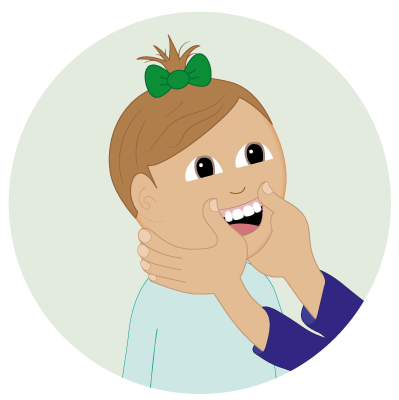
Lift the Lip is an oral health assessment tool that requires parents/guardians to visually examine the upper anterior teeth of their preschool children in the presence of health professionals, to identify signs of early childhood caries. It is intended to be used while delivering preventive advice and encouraging and facilitating attendance to clinical dental services. Lift the Lip in Wales is designed to strengthen the oral health promotion role of health visitors. Lift the Lip is part of the Designed to Smile training sessions provided to health visiting teams.
Key points:
- Baby teeth are important
- Preventing tooth decay is easier than treating it
- Decay happens very quickly in baby teeth
- The earlier decay is detected, the better the outcome will be
- Check your child’s teeth at home frequently
- Take your child to a dentist regularly, ideally as soon as their first teeth appear
The purpose of Lift the Lip is to:
- demonstrate how and encourage parents to frequently check their child’s teeth for signs of tooth decay
- highlight individual risk of dental caries and give specific prevention advice
- emphasise the importance of good oral health behaviours
- assess individual need for attendance to dental services, and facilitate that attendance