
Diabetic retinopathy
Sight loss from diabetic retinopathy has been reduced since screening started.1
1 Scanlon PH. The contribution of the English NHS Diabetic Eye Screening Programme to reductions in diabetes-related blindness, comparisons within Europe, and future challenges – PMC (nih.gov) Acta Diabetol. 2021 Apr;58(4):521-530. [Accessed: November 2022]
Diabetic retinopathy is a condition that can affect anyone who has type 1 or type 2 diabetes. It causes damage to the blood vessels supplying the back of the eye (the retina).
Over time, high blood sugar or big changes in blood sugar levels can make the blood vessels leak or become blocked. If left untreated, it can damage your eyesight. Diabetic retinopathy can take many years to develop and often has no obvious symptoms.
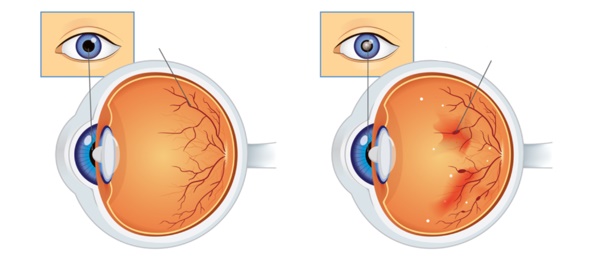
The first (left) image shows an eye with no retinopathy at the back of the eye (the retina). The second (right) image shows an eye that had diabetic retinopathy changes, with leaky blood vessels.
Finding early changes means you can have treatment to prevent sight loss. Going for diabetic eye screening when invited is important as it can pick up changes at early stage, before you notice any changes to your eyesight. Any changes can then be monitored and referred for treatment at a hospital if required.
It is important to keep healthy, by managing and treating your diabetes. Visit the Diabetes UK website or talk to your health professional for more information.
Risk factors for diabetic retinopathy
The length of time you have had diabetes
Diabetes is a lifelong condition that causes sugar levels in your blood to become very high. It is important that you go for your diabetic eye screening each time you are invited. Your chances of developing diabetic retinopathy increases over time due to high blood sugar levels or big changes to your sugar levels.
Managing your diabetes
Keeping your blood sugar levels within the recommended range for you (as discussed with your healthcare team) is the best way in preventing diabetic retinopathy. Managing your diabetes helps prevent complications.
Pregnancy
If you are pregnant and have diabetes you may have an increased risk of developing diabetic retinopathy. You will be offered extra diabetic eye screening appointments.
For information about screening in pregnancy, watch this video on the Antenatal Screening page. If you have any questions or concerns speak with your antenatal team.
Other medical conditions
Other medical health conditions or diseases may also increase your risk of developing retinopathy. These include high blood pressure, heart disease and high cholesterol.
Smoking
People with diabetes who smoke are more likely to develop retinopathy. For information about stop smoking visit Help Me Quit or phone 0800 085 2219.