

Deaths by suspected suicide 2024 to 2025
Authors: Analysis team
Published on: 27th November 2025
Next update: To be announced
Contact for queries or feedback
Introduction
The aim of the Real Time Suicide Surveillance System (RTSSS) is to act as a central national repository for deaths by suspected suicide in Wales and to generate the intelligence to inform suicide prevention activity across Wales. This annual report will help us understand which particular groups are at risk and will help to inform suicide prevention work.
This report contains sensitive content which refers to details on deaths by suspected suicide.
If you need support, information on sources of support in Wales can be found here: Get Help Now – NHS SSHP. The Samaritans can be contacted for free day or night, 365 days a year on 116 123 (UK and the Republic of Ireland) or by email at [email protected], or visit www.samaritans.org to find your nearest branch. Additional sources of support are listed at NHS help for suicidal thoughts webpage.
If you are a journalist covering news relating to suicide, please follow the Samaritans’ media guidelines and the Independent Press Standards Organisation reporting suicide guidance which advise on how to reduce the risk of media coverage negatively impacting on people who may be vulnerable.
Main points
- From 1 April 2024 – 31 March 2025 there were 440 deaths by suspected suicide of Welsh residents who died in or outside of Wales, giving a rate of 16.8 per 100,000 people. The rates in 2023/24 and 2022/23 were 13.4 (352 deaths) and 13.7 (359 deaths) respectively.
- Males accounted for 77% of deaths by suspected suicide. The age-specific rate was highest in males aged 35-44 years (41.8 per 100,000).
- The rate of suspected suicides in 2024/25 was over twice as high in residents in the most deprived (19.9 per 100,000) and next most deprived areas (22.1), compared with residents in the least deprived areas (9.3).
- The rate of deaths by suspected suicide in people who were reported to be unemployed was 150.8 per 100,000, which was over 12 times higher than in any other employment status group.
- 61% of people were reported to have had a mental health condition, 55% had a history of previous self-harm, and 29% were known to mental health services.
- 31% of the deaths by suspected suicide were in people who were known to the Police in the previous 6 months.
- Analysis of the first 3 years of RTSSS data has shown some differences in patterns of mode of death, domestic abuse and other associated factors between males and females.
- Collecting and sharing data via Real Time Suspected Suicide Surveillance allows action to prevent future deaths by suspected suicide to be taken in a timely way, by providing up to date intelligence to users on national and regional patterns.
- This is the third year of data reporting. Some amendments relating to analysis have been made since the first two years (see Technical Information) and will develop as further data are collected. Due to small numbers in some categories and the lack of time series data, there are limitations to the RTSSS dataset. These are outlined throughout this report.
- Deaths by suspected suicide are reported to Public Health Wales before a Coroner’s inquest. It is anticipated that the number of deaths by suspected suicide may be higher than the number of suicides as determined by a Coroner, as some deaths by suspected suicide may be found to have a different cause following a Coroner’s investigation and inquest.
Background
Real Time Suspected Suicide Surveillance (RTSSS) was established in Wales on 1 April 2022. It collects information on deaths by suspected suicide that occur in Wales, as well as deaths of Welsh residents that occur outside of Wales.
The aim of the RTSSS is to act as a central national repository for deaths by suspected suicide in Wales and of Welsh residents and to generate the intelligence to inform suicide prevention activity across Wales.
Suspected suicides are reported to the RTSSS before a Coroner’s inquest. It is anticipated that these may be higher than the number of suicides as determined by a Coroner, as some may be found to have a different cause following a Coroner’s investigation and inquest.
Data collected on suspected suicides are different from suicide data as reported by the Office for National Statistics (ONS). Suicides reported by the ONS include deaths which are registered following an inquest where a Coroner has determined:
- a suicide conclusion
- a narrative conclusion (where the death may be recorded as intentional self-harm or injury or poisoning of undetermined intent, based on the information provided by the Coroner)
- an open conclusion (where the death may be coded as injury or poisoning of undetermined intent based on the information provided by the Coroner).
(Suicide rates in the UK QMI. 2019, ONS)
Suicide statistics published by the ONS are the official statistics on suicide and should be used for strategic planning and comparison purposes. ONS suicide statistics on deaths registered in 2024 were published on 3 October 2025.
Official Statistics in development
These statistics are published as Official Statistics in Development. These are statistics that have not yet been fully developed and are still being tested, but we are confident they are still of value. This is the third year of publication and the RTSSS is still in development. Further sources are being explored and there have been a number of amendments since the first two reports in response to feedback from users. Further developments will require a period of testing with users. In time it is anticipated that these statistics can be published to the standard of the Code of Practice for Statistics and can be published as Official Statistics.
The Technical Information section in Appendix 2 contains information on:
- Data sources
- Data quality
- Data analysis
- Strengths and limitations
- Amendments since the 2023/24 annual surveillance report.
User engagement
We welcome feedback on this report. We clarified user needs with a number of stakeholders prior to the publication of the first annual report and widely circulated a feedback survey following the publication of the first two reports. We have attended national and regional suicide prevention fora to present the data and share development updates and have held a feedback session with key stakeholders to determine the value of the data. We have taken into consideration feedback and comments in the planning of this report. A feedback survey will be available following publication of this report. Any feedback, comments, or queries can also be directed to [email protected].
Pre-release list
Public Health Wales
- Iain Bell, Executive National Director for Research, Data and Digital, Public Health Wales
- Dr. Louisa Nolan, Head of Data Science & Analytics, Public Health Wales
Welsh Government
- Jon Lane, Head of Suicide Prevention and Self-harm Policy team, Welsh Government
- Holly Howe-Davies, Senior Policy and Evidence Advisor, Suicide Prevention and Self-harm Policy team, Welsh Government
- Laura Jardine, Senior Policy Advisor for Suicide and Self-harm, Suicide Prevention and Self-harm Policy team, Welsh Government
- Chloe Whiteley, Mental Health Senior Statistical Officer, Welsh Government
- Chief Inspector Paul Biggs, Police Liaison Unit, Welsh Government
NHS Performance & Improvement
- Claire Cotter, Head of Programme, Suicide and Self Harm Programme (SSHP), NHS Wales Performance & Improvement
- Deborah Job, North Wales Regional Lead, SSHP
- Laura Tranter, Mid & West Wales Regional Lead, SSHP
- Ceri Fowler, South-East Wales Regional Lead, SSHP
- Lara Homan, Quality & Performance Improvement Manager, Mental Health and Learning Disabilities, Performance and Assurance, NHS Wales Performance & Improvement
Other organisations
- Philip Daniels, Executive Director of Public Health, Cwm Taf Morgannwg University Health Board
- Prof. Ann John, National Centre for Suicide Prevention and Self-Harm Research, Swansea University
Findings
Deaths by suspected suicide in Wales
From 1 April 2024 to 31 March 2025, there were 440 suspected suicides of Welsh residents of all ages that occurred in Wales or outside Wales, giving a rate of 16.8 per 100,000. There were an additional 20 suspected suicides of non-Welsh residents that occurred in Wales.
Table 1. Deaths by suspected suicide, by year, all persons, all ages, counts and crude rate per 100,000, Welsh residents, 2022/23 – 2024/25
| Time period | Count of deaths |
Rate per 100,000 (95% confidence intervals) |
| 2022/23 | 359 | 13.7 (12.3-15.2) |
| 2023/24 | 352 | 13.4 (12.1-14.9) |
| 2024/25 | 440 | 16.8 (15.3-18.5) |
The rate in 2024/25 was statistically significantly higher than in 2023/24 and 2022/23 (Table 1). This could be because of a real increase in the rate of suspected suicides in Wales or it could be because of increased reporting into RTSSS during 2024/25.
The analyses presented in this report include suspected suicides of Welsh residents only for 2024/25, with comparisons with 2022/23 and 2023/24 using revised figures which are shown in the data tables.
Deaths by suspected suicide, Welsh residents, by month
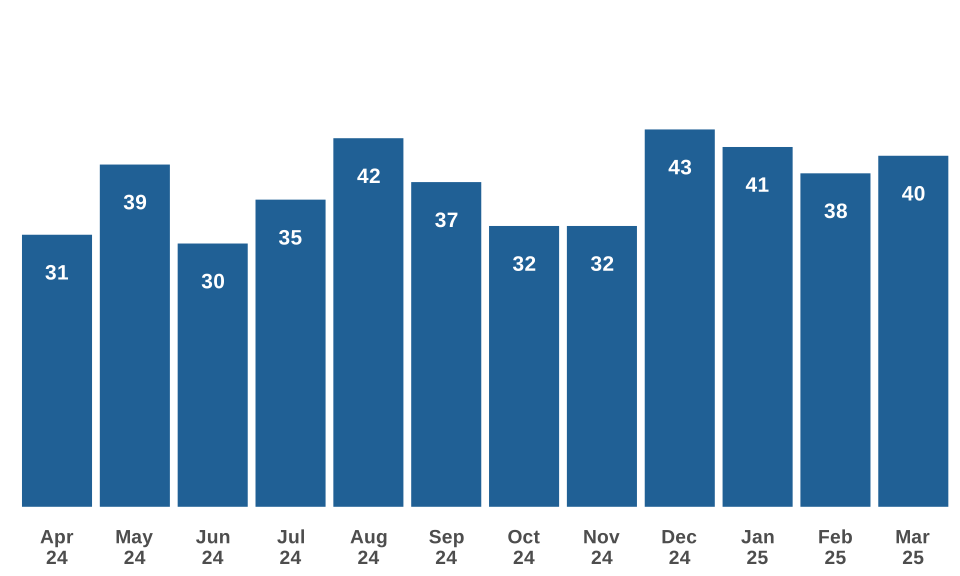
Figure 1. Deaths by suspected suicide, by month, all persons, all ages, counts, Welsh residents 2024/25
Produced by Public Health Wales, using RTSSS data
Summary:
- From this data you cannot conclude that there was any significant variation in the number of suspected suicides month on month during 2024/25.
Figure 1 shows that the number of deaths ranged from 30 deaths in June 2024 to 43 deaths in December 2024. The mean (average) number of deaths was 37 per month and the standard deviation was 4. It is expected that around two thirds of the time that counts would be inside one standard deviation of the mean, and this was the case for 10 out of 12 months, so the variation seen is what would be expected.
In 2022/23, the range was 20 to 37 deaths and in 2023/24 the range was 21 to 41 (see data tables).
Deaths by suspected suicide, by region of residence
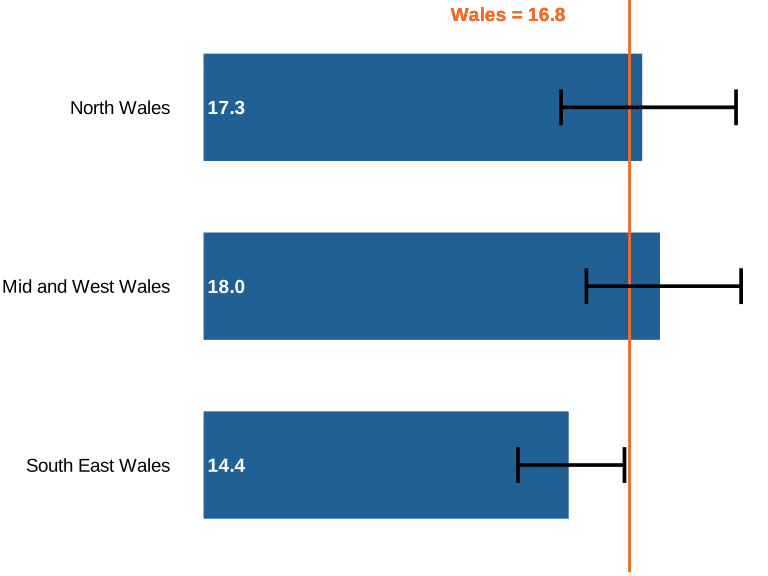
Figure 2. Deaths by suspected suicide, by region of residence, crude rate per 100,000, Welsh residents, 2024/25
Produced by Public Health Wales, using RTSSS data and MYE (ONS)
Summary:
- The rate of suspected suicides in South-East Wales in 2024/25 was statistically significantly lower than the all-Wales rate.
- The rate of suspected suicides in North Wales and Mid & West Wales in 2024/25 was not statistically significantly different to the all-Wales rate.
- Over the last 3 years the rates in each of the three regions were not statistically significantly different year on year.
The rate in South-East Wales (14.4 per 100,000) was statistically significantly lower than the all-Wales rate (16.8). The rate of suspected suicides was not statistically significant from the all-Wales rate in Mid and West Wales (18.0) and North Wales (17.3).
Table 2. Deaths by suspected suicide, by region of residence, by year, all persons, all ages, crude rate per 100,000, Welsh residents, 2022/23 – 2024/25
| 2022/23 | 2023/24 | 2024/25 | |
| North Wales |
11.4 (95% CI 8.8-14.5) |
14.9 (95% CI 11.9-18.4) |
17.3 (95% CI 14.1-21.0) |
| Mid and West Wales |
16.3 (95% CI 13.5-19.4) |
12.6 (95% CI 10.2-15.4) |
18.0 (95% CI 15.1-21.2) |
| South-East Wales |
11.7 (95% CI 9.9-13.7) |
12.5 (95% CI 10.7-14.6) |
14.4 (95% CI 12.4-16.6) |
Table 2 shows the regional rates from 2022/23 to 2024/25. In 2024/25 the rates in each of the three regions are higher than the previous two years, but the rates over the three years were not statistically significant from each other.
The 95% confidence intervals of the regional rate estimates in 2024/25 overlapped but since two estimates with overlapping confidence intervals can still be statistically significantly different, further testing using the pairwise comparison of regions was done. It showed that there was no statistically significant difference between regional rate estimates (Appendix 1).
Deaths by suspected suicide, by health board area of residence
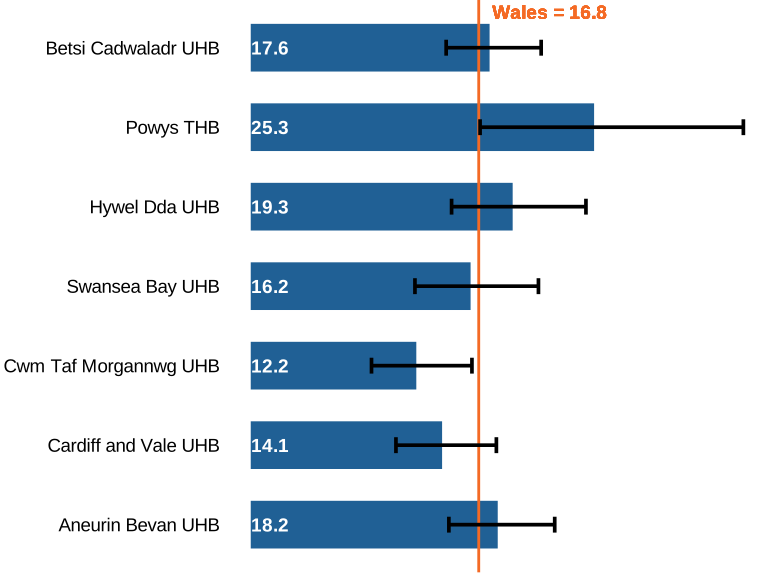
Figure 3. Deaths by suspected suicide, by health board area of residence, crude rate per 100,000, Welsh residents, 2024/25
Produced by Public Health Wales, using RTSSS data and MYE (ONS)
Summary:
- The rate in 2024/25 was statistically significantly higher in Powys Teaching Health Board compared with the all-Wales rate, and statistically significantly lower in Cwm Taf Morgannwg University Health Board.
Figure 3 shows that the rate in residents of Powys Teaching Health Board (25.3 per 100,000) was statistically significantly higher than the all-Wales rate. However, there are wide confidence intervals for the Powys rate because the rate was based on 29 deaths in a relatively small population. Small numbers are susceptible to random variation and so caution should be used when interpreting the rate.
The rates in Betsi Cadwaladr University Health Board (17.6), Hywel Dda University Health Board (19.3) and Aneurin Bevan University Health Board (18.2) were higher than the all-Wales rate, but they were not statistically significantly higher. The rates in Swansea Bay University Health Board and Cardiff and Vale University Health Board had lower (but not statistically significantly lower) rates than the all-Wales rate. The lowest rate was in Cwm Taf University Health Board (12.2), which was statistically significantly lower than the all-Wales rate.
Rates in residents of Aneurin Bevan University Health Board, Betsi Cadwaladr University Health Board, Cardiff and Vale University Health Board, Hywel Dda University Health Board and Powys Teaching Health Board increased since 2022/23 and 2023/24 but none of these increases were statistically significant. In Swansea Bay University Health Board the rate was higher, but not statistically significantly higher, than in 2023/24, but not than in 2022/23. In Cwm Taf University Health Board the rate in 2024/25 decreased from 2023/24 and was higher than in 2022/23 but these differences were not statistically significant.
In order to establish whether there was a statistically significant difference between health boards, a pairwise comparison of health boards was done (Appendix 1). It showed that:
- The rate in residents of Cwm Taf Morgannwg University Health Board was statistically significantly lower than the rates in Aneurin Bevan University Health Board, Betsi Cadwaladr University Health Board, Hywel Dda University Health Board and Powys Teaching Health Board
- The rate in residents of Cardiff and Vale University Health Board was also statistically significantly lower than the rate Powys Teaching Health Board
- There were no other statistically significant differences between the remaining health boards.
Deaths by suspected suicide, by area of deprivation
Figure 4. Deaths by suspected suicide, by deprivation fifth*, crude rate per 100,000, Welsh residents, 2024/25
Produced by Public Health Wales, using RTSSS data, MYE (ONS) and WIMD 2019 (WG)
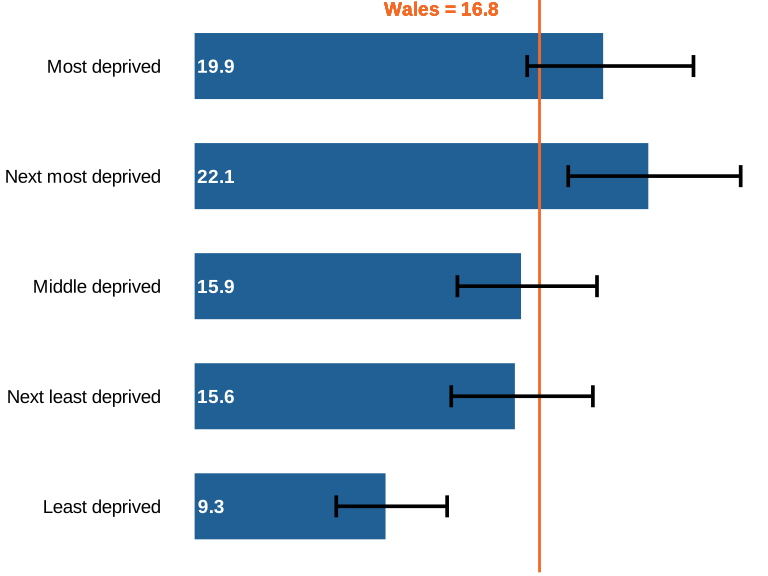
*8 cases had incomplete postcode data and therefore are not included
Summary:
- The rate of suspected suicides in 2024/25 was over twice as high in residents in the most deprived, and next most deprived areas, compared with residents in the least deprived areas; these differences were statistically significantly different.
Figure 4 shows that the rate of suspected suicides was statistically significantly higher than the all-Wales rate in residents who lived in the next most deprived areas (22.1 per 100,000) and statistically significantly lower in residents who lived in the least deprived areas (9.3).
The rate was higher than the all-Wales rate in residents in the most deprived area (19.9) and lower in residents in the middle deprived (15.9) and least next deprived areas (15.6). None of these differences were statistically significant.
In the least deprived area the rates were similar in 2022/23 (10.3) and 2023/24 (9.5). In the most deprived area the rates were lower in 2022/23 (15.7) and 2023/24 (17.3) than in 2024/25 but the differences were not statistically significant.
There was a statistically significant difference between the least deprived fifth and all other deprivation fifths.
The rate of suspected suicides in 2024/25 was over twice as high in residents in the most deprived (19.9), and next most deprived areas (22.1), compared with residents in the least deprived areas (9.3).
Pairwise comparison showed that there was also a statistically significant difference between the rate in the next least deprived and the next most deprived fifths, and the middle deprived and the next most deprived fifths (Appendix 1).
Deaths by suspected suicide, by age and sex
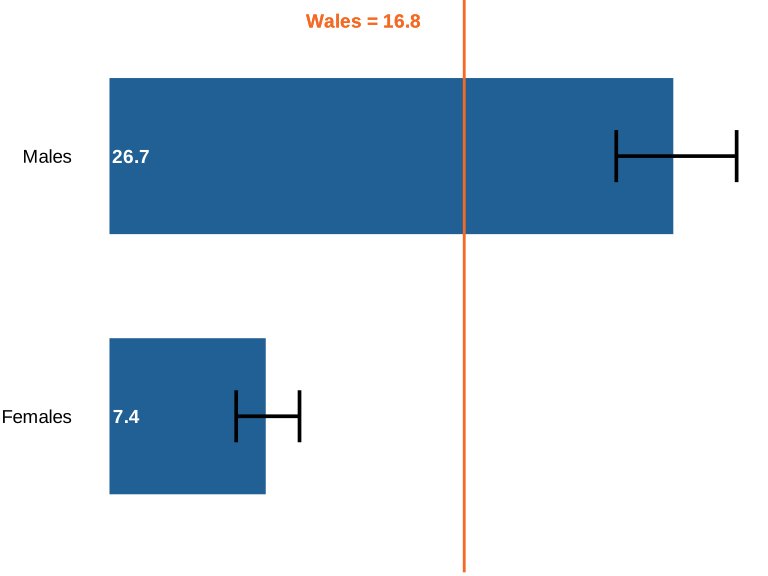
Figure 5. Deaths by suspected suicide, by sex, crude rate per 100,000, Welsh residents, 2024/25
Produced by Public Health Wales, using RTSSS data and MYE (ONS)
Summary:
- The rate in males is statistically significantly higher and the rate in females is statistically significantly lower than the all-Wales rate
- Males accounted for 77% of suspected suicides.
Figure 5 shows that the rate in males (26.7 per 100,000) was statistically significantly higher compared with the all-Wales rate (16.8) and with the rate in females (7.4). The rate of death in females was statistically significantly lower than all-Wales rate.
The rates in males in 2024/25 were higher than the rates in 2022/23 and 2023/24 with rates of 21.9 per 100,000 and 20.8 respectively, with the increase from 2023/24 being statistically significant.
The rates in females in 2024/25 were slightly higher than the rates in 2022/23 and 2023/24 with rates of 6.0 and 6.5 respectively. These differences were not statistically significant.
Figure 6. Deaths by suspected suicide, by age group* and sex, all persons, crude rate per 100,000, Welsh residents, 2024/25
Produced by Public Health Wales, using RTSSS data and MYE (ONS)
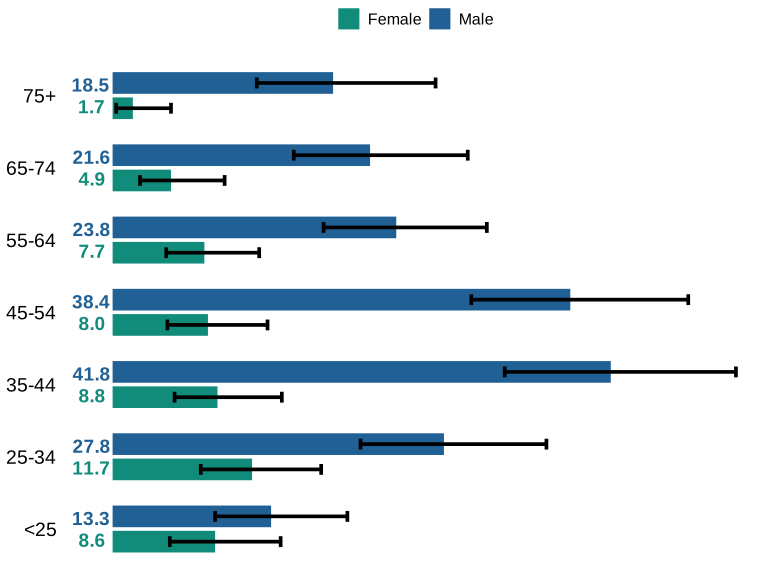
*Age group <25 has been used instead of 15-24 years to ensure all deaths by suspected suicide are reported
Summary:
- From these data you can conclude that the highest rate of suspected suicides occurred in males aged between 35 and 54 years.
Figure 6 shows that the highest rate of suspected suicides occurred in males aged 35-44 years (41.8 per 100,000), followed by males aged 45-54 years (38.4).
In 2023/24, the highest rate also occurred in males aged 35-44 years (34.6), followed by males aged 45-54 years (25.8). The rates in these age/sex groups increased from 2022/23 and 2023/24 to 2024/25 but these differences were not statistically significant.
In 2022/23, the highest rate occurred in males aged 25-34 years (32.0); these rates decreased in 2023/24 (23.1) and 2024/25 (27.8) but these differences were not statistically significant.
The highest rate in females was in the 25-34 years age group (11.7), followed by the 35-44 years age group (8.8). The rate in females aged 25-34 years was higher than the rate in 2022/23 and 2023/24 (both 10.2) but it was not statistically significantly higher.
In all age groups, apart from the under 25 years age group, the rates were statistically significantly higher in males compared with females. Further pairwise comparison was not done for age-sex due to small numbers (less than 10).
Deaths by suspected suicide, by employment status
Figure 7. Deaths by suspected suicide, by employment status*, crude rate per 100,000, aged 16+, Welsh residents, 2024/25
Produced by Public Health Wales, using RTSSS data and Economic activity status data (ONS)
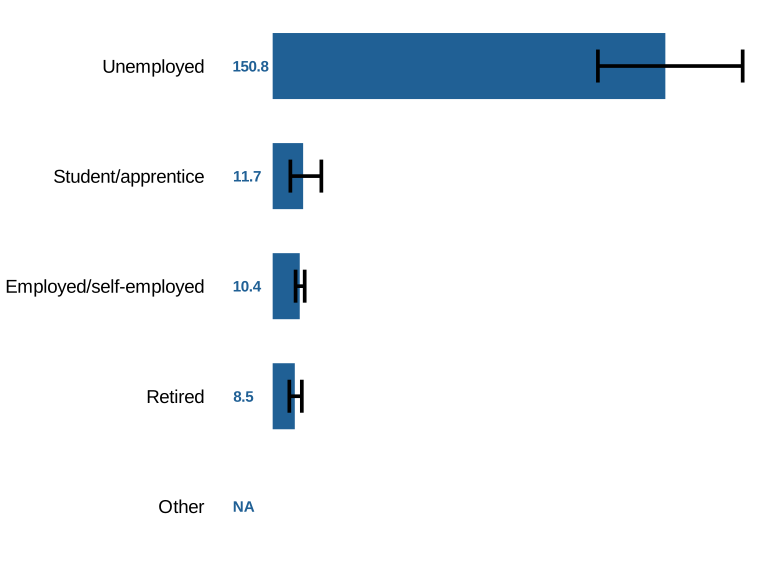
*105 cases had an unknown employment status therefore are not included
Summary:
- The rate of suspected suicide was statistically significantly higher in people who were reported to be unemployed compared with any other employment status group.
The highest rate of suspected suicides was in people where employment status was recorded as unemployed (150.8 per 100,000). This was statistically significantly higher than any other employment status group and over 12 times higher than the next highest group which was in people who were students/apprentices (11.7).
The rate in people who were unemployed increased since 2022/23 and 2023/24, when it was 114.1 per 100,000 and 126.7 respectively but this increase was not statistically significant.
NB. It should be noted that in 105 people (24%) the employment status was unknown. This could affect the findings (by increasing or decreasing the rate) if those who had unknown employment status were more likely or less likely to be unemployed.
Deaths by suspected suicide and associated factors
Figure 8. Deaths by suspected suicide, by associated factors*, all persons, all ages, count**, Welsh residents, 2024/25***
Produced by Public Health Wales, using RTSSS data
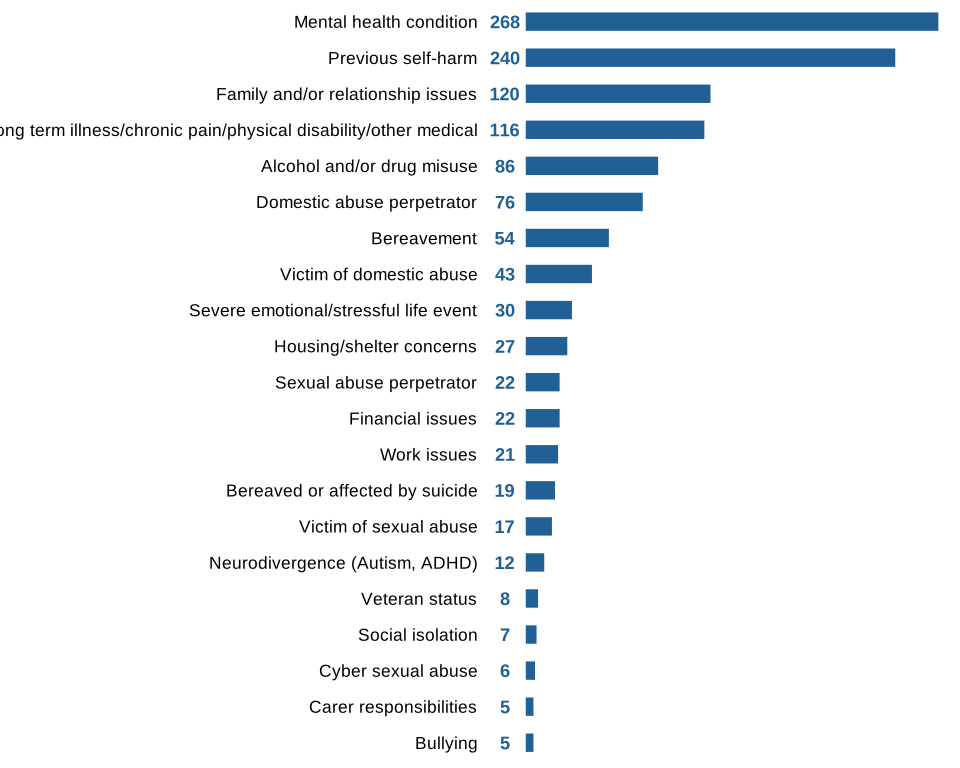
*Multiple associated factors listed, therefore, some may be counted in more than one category. **Counts under 5 have been removed. ***Cyber sexual abuse includes both victims and perpetrators
Summary:
- The most common associated factors were mental health condition (61%) and a history of previous self-harm (55%)
- From these data you cannot conclude what the rate of suspected suicide was in people who had a mental health condition or history of previous self-harm, or any other associated factor, as the number of people in the whole population who have each associated factor is unknown.
The most common associated factor was mental health condition, which was reported in 268 out of 440 people (61%) who died by suspected suicide. A history of previous self-harm was reported in 240 out of 440 people (55%). Family and/or relationship issues were reported in 120 out of 440 people (27%) and long-term illness/chronic condition were reported in 116 out of 440 people (26%).
Percentages for these associated factors in 2023/24 were: mental health condition 63%, history of previous self-harm 53%, family and/or relationship issues 27% and long-term illness/chronic condition 26%. In 2022/23 percentages were: mental health condition 49%, history of previous self-harm 49%, family and/or relationship issues 20% and long-term illness/chronic condition 16%.
Deaths by suspected suicide, by whether people were known to mental health services 6 months prior to death
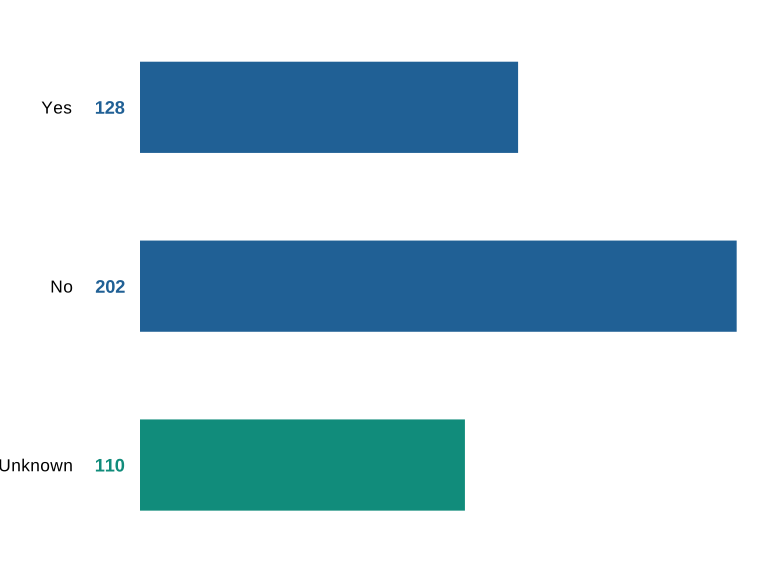
Figure 9. Deaths by suspected suicide, by whether known to mental health services, all persons, all ages, count, Welsh residents, 2024/25
Produced by Public Health Wales, using RTSSS data
Summary:
- 29% of people who died by suspected suicide were known to mental health services in the 6 months prior to death.
- Further analysis needs to be undertaken to understand how people were known to mental health services.
Of the 440 people who died by suspected suicide, 128 (29%) were known to mental health services in the 6 months prior to death. 202 (46%) were not known to mental health services. For 110 people (25%) it was unknown whether they were known to mental health services (Figure 9), so it is possible that the percentage of people who were known to mental health services was underestimated or overestimated.
Percentages for whether people were known to mental health services 6 months prior to death were similar in 2022/23 (29%) and 2023/24 (30%).
Not all people who were known to mental health services had a known mental health condition. Of the 268 people who were reported to have had a mental health condition, 121 (45%) were known to mental health services in the 6 months prior to death, 86 (32%) were not known to mental health services and for 61 (23%) it was unknown (not shown on chart).
Percentages for whether people who had a mental health condition and were known to mental health services 6 months prior to death were similar in 2022/23 (45%) and 2023/24 (40%).
Deaths by suspected suicide, by whether people were previously known to police
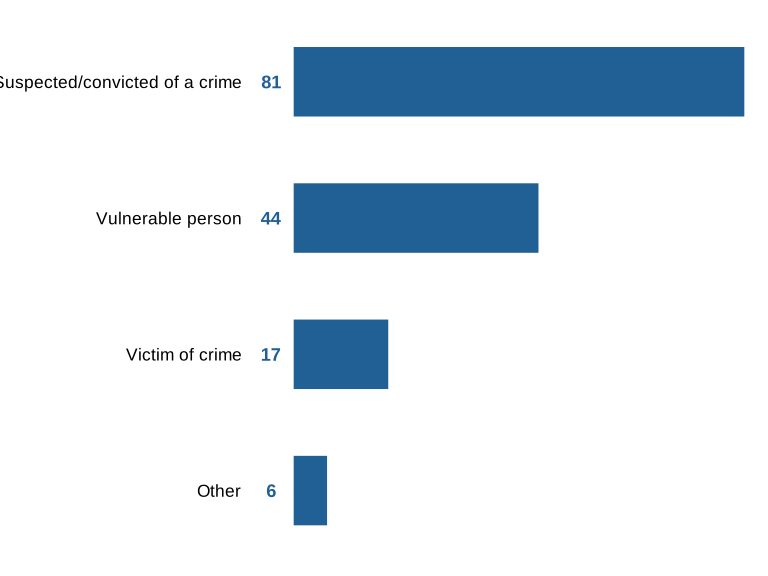
Figure 10. Deaths by suspected suicide, by reasons previously known to police in previous 6 months*, all persons, all ages, count, Welsh residents, 2024/25
Produced by Public Health Wales, using RTSSS data
*Some may be counted in more than one category
Summary:
- 31% of people who died by suspected suicide were known to Police in the 6 months prior to death
- From these data you cannot conclude what the rate of suspected suicide was in people who were suspected/convicted of a crime, victim or witness of a crime, or were a vulnerable person, as the number of people in the whole population who were known to police is unknown.
Out of 440 suspected suicides, 137 people (31%) were known to police in the 6 months prior to their death. The most common reason for being known to the police was from being suspected/convicted of a crime (81 out of 440, 18%).
Percentages for whether people were known to police in the 6 months prior to death were 37% in 2022/23 and 35% in 2023/24.
Deaths by suspected suicide, by mode of death
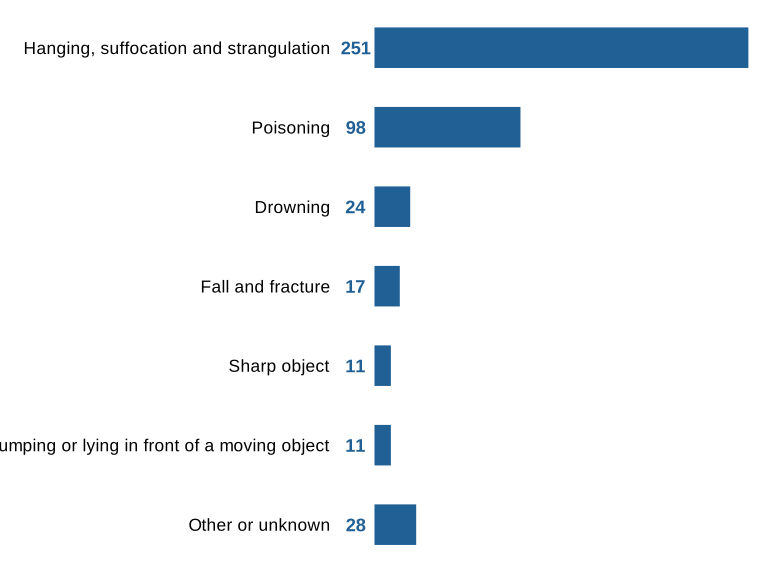
Figure 11. Deaths by suspected suicide, by mode of death, all persons, all ages, count*, Welsh residents, 2024/25
Produced by Public Health Wales, using RTSSS data
*Counts under 5 are included in the ‘Other or unknown’ category
Summary:
- Hanging, strangulation or suffocation was the most common mode of death.
Hanging, strangulation or suffocation accounted for 251 out of 440 (57%) suspected suicides. The second most common mode of death was poisoning which accounted for 98 out of 440 (22%) suspected suicides.
Percentages for mode of death by hanging, strangulation or suffocation were 64% in 2022/23 and 57% in 2023/24. Percentages for mode of death by poisoning were 18% in 2022/23 and 20% in 2023/24.
Deaths by suspected suicide, by location type
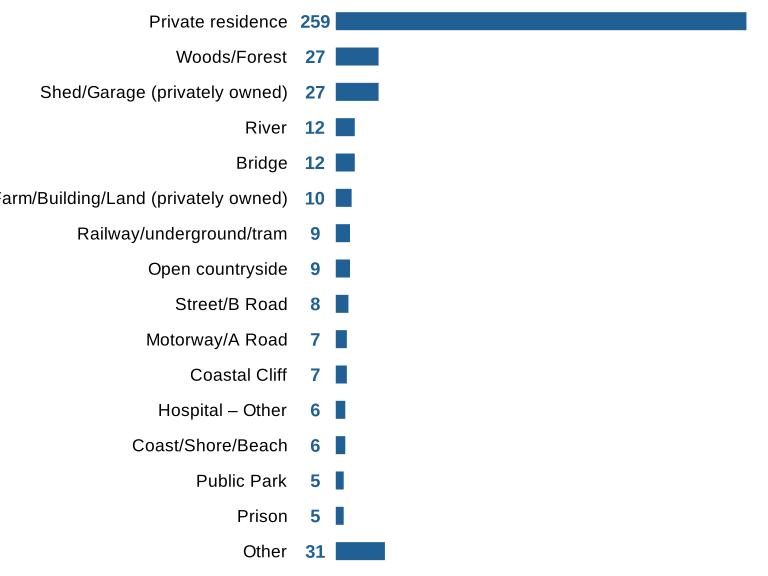
Figure 12. Deaths by suspected suicide, by location type, all persons, all ages, count*, Welsh residents, 2024/25
Produced by Public Health Wales, using RTSSS data
*Counts under 5 included in the ‘Other’ category
Summary:
- Incidents that led to death by suspected suicide most commonly occurred in private residences.
Incidents that led to death by suspected suicide that occurred in private residences accounted for the majority (259) of the 440 incidents (59%). Another 37 incidents (8%) occurred in privately owned locations – sheds and garages (27) and farms/building/land (10). Woods or forests accounted for 27 out of 440 incidents (6%).
Percentages for deaths that occurred in private residences were 59% in in 2022/23 and 2023/24. Percentages for the less common locations have fluctuated year on year, which would be expected when there are small numbers.
Insights from April 2022 to March 2025 data
Local authority of residence
Produced by Public Health Wales, using RTSSS data
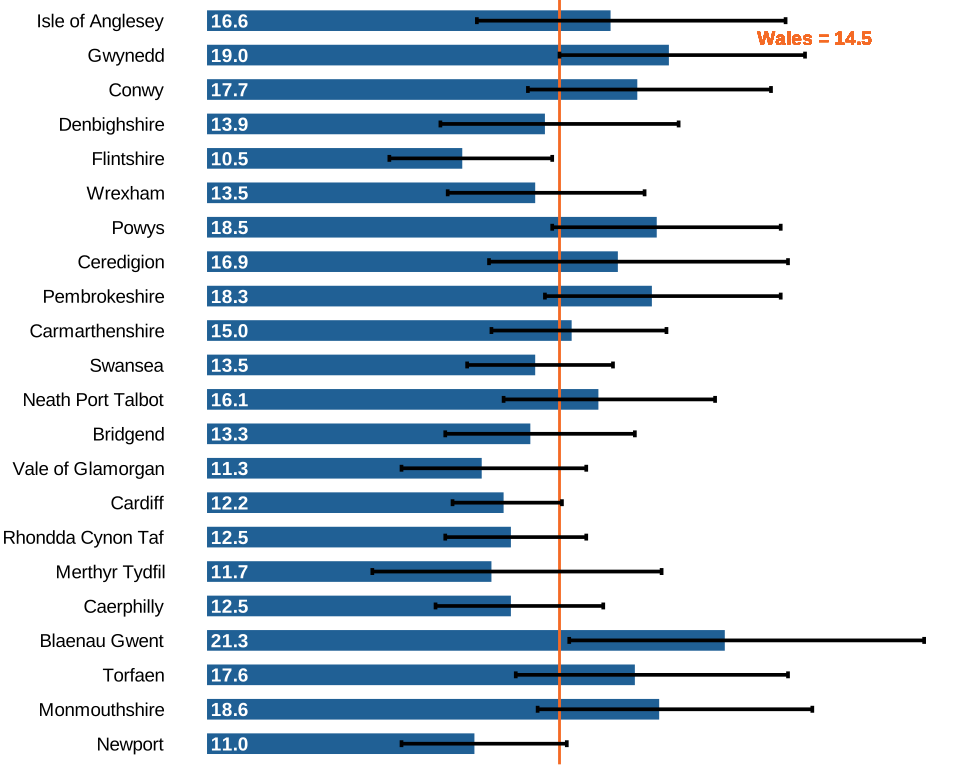
*7 cases had incomplete address data and therefore are not included.
Summary:
- The highest local authority 3-year rate was in Blaenau Gwent local authority which was statistically significantly higher than the all-Wales rate.
The highest local authority 3-year rate was in Blaenau Gwent local authority (21.3 per 100,000), which was statistically significantly higher than the all-Wales 3-year rate (14.5).
Isle of Anglesey, Gwynedd, Conwy, Powys, Ceredigion, Pembrokeshire, Carmarthenshire, Neath Port Talbot, Torfaen and Monmouthshire all had 3-year rates which were higher than the all-Wales 3-year rate, but none were statistically significantly higher.
The 3-year rates were statistically significantly lower than the all-Wales 3-year rate in Flintshire (10.5).
Associated factors
Most common associated factors, by sex, 3–year period
Table 3. Most common associated factors in deaths by suspected suicide, by sex, percentage, 1 April 2022 to 31 March 2025
| Males | % | Females | % | |
| Most common | Mental health condition | 56 | Previous self-harm | 65 |
| Second most common | Previous self-harm | 49 | Mental health condition | 64 |
| Third most column | Family and/or relationship issues | 26 | Long term illness / chronic pain / physical disability / other medical | 28 |
(Note: more than one factor may be associated with each suspected suicide)
Summary
- The pattern of associated factors differed between males and females.
This data should be interpreted with caution because the robustness of the data is not known due to the subjectivity of reporting and interpretation of some of the associated factors.
Domestic abuse, by sex, 3-year period
| Domestic abuse victim | Perpetrator of domestic abuse | |
| Males | 5% | 22% |
| Females | 23% | 10% |
*Victim of domestic abuse includes witness/bystander.
**This data should be interpreted with caution because the robustness of the data is not known due to the subjectivity of reporting and interpretation of some of the associated factors.
Table 4 shows the percentage by reason broken down by sex of suspected suicides that were identified as an associated factor under a domestic abuse related reason. This data should be interpreted with caution because the robustness of the data is not known due to the subjectivity of reporting and interpretation of some of the associated factors.
Males were more likely to be known to police for being suspected of domestic abuse, whereas females were more likely to be known to police for being a victim of domestic abuse.
Modes of death, by sex, 3-year period
Table 5. Most common modes of death in deaths by suspected suicide, by sex, percentage, 1 April 2022 to 31 March 2025
| Males | % | Females | % | |
| Most common | Hanging, suffocation and strangulation | 62 | Hanging, suffocation and strangulation | 50 |
| Second most common | Poisoning | 17 | Poisoning | 32 |
| Third most common | *Other or unknown | 6 | Drowning | 8 |
*see glossary for ‘Other’ definition
Summary:
- Hanging, suffocation and strangulation was the most common mode of death for both males and females but was more common in males.
Conclusion
There were 440 suspected suicides of Welsh residents who died in or outside of Wales, between 1 April 2024 and 31 March 2025, giving a rate of 16.8 per 100,000 people. Males accounted for 77% of suspected suicides. The age-specific rate was highest in males aged 35-44 years (41.8). Mid & West Wales had the highest rate of suspected suicides by region (18.0), but it was not statistically significantly different to the all-Wales rate. Powys Teaching Health Board had the highest rate of suspected suicides by health board area of residence (25.3) which was statistically significantly higher than the all-Wales rate, but the 3-year rate at local authority level showed that the rate in Powys local authority (18.5) (which has the same footprint as the health board) was not statistically significantly different to the 3-year all-Wales rate (14.5). The highest rate of suspected suicides by local authority was in Blaenau Gwent (21.3); this was statistically significantly higher than the 3-year all-Wales rate.
The rate of suspected suicides in 2024/25 was over twice as high in residents in the most deprived (19.9) and next most deprived areas (22.1), compared with residents in the least deprived areas (9.3); these differences were statistically significant.
The rate of suspected suicides in people who were reported to be unemployed was 150.8 per 100,000, which was over 12 times higher than in any other employment status group.
61% of people were reported to have had a mental health condition and 29% were known to mental health services in the 6 months prior to death. A history of previous self-harm was reported in 55% of people. 31% of the suspected suicides were in people known to the Police in the previous 6 months.
Analysis of the first 3 years of RTSSS data has shown that the most common associated factors in males was mental health condition (56%), previous self-harm (49%) and family and/or relationship issues (26%). For females the most common associated factors were previous self-harm (65%), mental health condition (64%) and long term illness/chronic pain/physical disability/other medical issues (28%). Data on domestic abuse showed that males were more likely to be perpetrators compared with females (22% and 10% respectively) and females were more likely than males to be victims (23% and 5% respectively).
This information can be used to inform suicide prevention work in Wales in order to reduce the number of suicides in the Welsh population.
Data tables
Access the data related to this annual report
Technical guidance
Access the technical report related to this annual report
Appendix
Pairwise comparison results
The pairwise comparison looked at the difference between the rates and the 95% confidence intervals of the difference. When the confidence interval of the rate difference is above zero, the two rates are considered significantly different with 95% confidence. See data section for details.
ISBN: 978-1-83766-744-4