

Profiles of young people and adults who smoke
Published on: 7th April 2025
- All Wales/National
- Cluster
Key messages
This study finds:
- young people who smoke have different distinctive profiles from characteristics that cluster across age, gender, risk behaviours, mental health and prosocial skills
- adult smokers and ex-smokers have distinctive profiles that only partly overlap relating to combinations of age, sex, marital status, with children, wealth, mental health, health, risk behaviours and e-cigarette use
This shows there are new and different profiles of smokers using a wider context that may provide insight into how to help people quite smoking.
Public Health Wales is using the results of this study to inform development of marketing activities to tailor messaging to different people about stop smoking services.
The study
Rationale – why is this important?
Smoke-free Wales by 2030
This report contains new research to provide ideas on how to target messaging about how to quit smoking and to prevent people from starting to smoke to help Wales meet a smoke free target in 2030. Smoking continues to be a major risk factor for poor health in the Welsh population1. The Welsh Government’s latest Tobacco Control Strategy2 has an ambition for Wales to become smoke free by 2030, defined as reducing smoking prevalence, the amount of smoking in the population, to 5%. Wales’s national stop smoking service, Help Me Quit (HMQ)3 provides evidence-based interventions from research delivered through national, local community and pharmacy support. In 2021/22 the National Survey for Wales reports smoking prevalence in adults was 13%4.
Falling prevalence and remaining smokers
This analysis investigates how smokers cluster into several different groups from combinations of characteristics across their demographics, lifestyle, health and well‑being. Evidence from a number of sources, including data from the Annual Population Survey5 and HMQ suggests that as population prevalence has fallen, smoking has become more concentrated in marginalised groups.6,7,8 Improving our understanding of these groups will help to develop more effective ways to reach and support them to prevent and stop smoking. This may include targeting marketing activities, developing or enhancing interventions and support9, and developing ‘Tobacco Endgame’ government policies. Examples of these approaches are highlighted in the Khan Review10 and the Welsh Government strategy2 and have the potential to deliver a step change in smoking prevalence.
Identifying groups
This analysis aims to identify groups where different messages and approaches may be needed to engage with smokers who have different characteristic profiles to discuss how to quit smoking. It is known that there are several important factors that are associated with whether people are likely to start or stop smoking and smoking advice should consider personal preferences, health and social circumstances 12,13. However, many of these factors are related to each other and some factors may be more important to certain groups of people. This analysis has been used to better understand the clustering of these characteristics and to look at factors that relate to groups of people who have a higher tendency to be a smoker such as living in deprivation2.
What did we do?
National surveys
We used data from two national surveys to bring together information on demographics, smoking history, e-cigarette use, lifestyle factors, individual-level deprivation, employment, general health and long-term conditions, mental health and well-being. In young people we identified six distinctive population groups in those who smoke. In adults we identified eight distinctive population groups in those who smoke and those who have quit smoking.
Surveys: we used two surveys that are representative of the population in Wales
- for young people aged 11-16 years we used the School Health Research Network (SHRN), Student Health and Well-being (SHW) Survey in Secondary Schools, a total population survey across Wales (SHRN SHW; 2021/22)
- for adults (age 16+ years) we used the National Survey for Wales, a random sample of the Welsh population weighted to represent the population in Wales (NSW; 2021/22)
Clustering
The NSW survey of adults and previous research showed the majority of smokers in the Welsh population began to smoke between age 11-24 years, and mostly during adolescence. Therefore, we did a cluster analysis in those age 11-16 years using the School Health Research Network survey data.
In addition, we did a cluster analysis in adults who smoke in Wales and repeated the analysis in ex-smokers to see if there were differences in characteristics between these two groups.
The clustering technique
Cluster analysis is an unsupervised machine learning technique that means it can create groups of individuals that are not known in advance based on combinations of similar characteristics. Each analysis in this project used over 60 variables from the national surveys used. The analysis enables us to identify distinctive cluster groups in the population. However, group characteristics from the cluster analysis show only more common rather than exclusive characteristics for any cluster group. For more information the full report and technical report are available on request (please contact Annette Evans at [email protected] or Rhian Hughes at [email protected]).
What did we find?
Describing different cluster groups of young people who smoke
Smoking prevalence
In 2021/22, 4.5% of individuals aged 11-16 years reported smoking and 3.1% did not want to answer the smoking status question out of N=117,097 responses from the population of Wales. There were 8,842 individuals aged 11-16 years who were smokers (from daily to less than once a week described as occasional smokers) or who did not disclose their smoking status.
Cluster groups
We identified 6 distinctive cluster groups of youth smokers (figure in brackets is the % of the population included in each cluster group).
1) Younger boys (age 11-13 years) with higher family wealth, good mental health but lower prosocial behaviours (social skills or competences) for some (21%)
2) Older girls (age 14-16 years), who smoke daily, were more likely to have risky behaviours (use of alcohol, recreational drugs, e-cigarettes), and have poorer mental health and lower prosocial behaviours for some (21%)
3) Youths (age 11-16 years) who smoke regularly, had poor mental wellbeing and higher risk behaviours (10%)
4) Young boys (age 11-13 years) who were more likely to answer ‘I do not want to answer’ to many survey questions (11%)
5) Younger girls (age 11-13 years) who were occasional smokers had little risk behaviour, but poor well-being and mental health, they were less likely to be living without one of their mother or father in the home where they live most of the time (21%)
6) Older girls (14-16 years) who were occasional smokers and had good well-being and health, little risk behaviour, they were less likely to be living without one of their mother or father in the home where they live most of the time (17%)
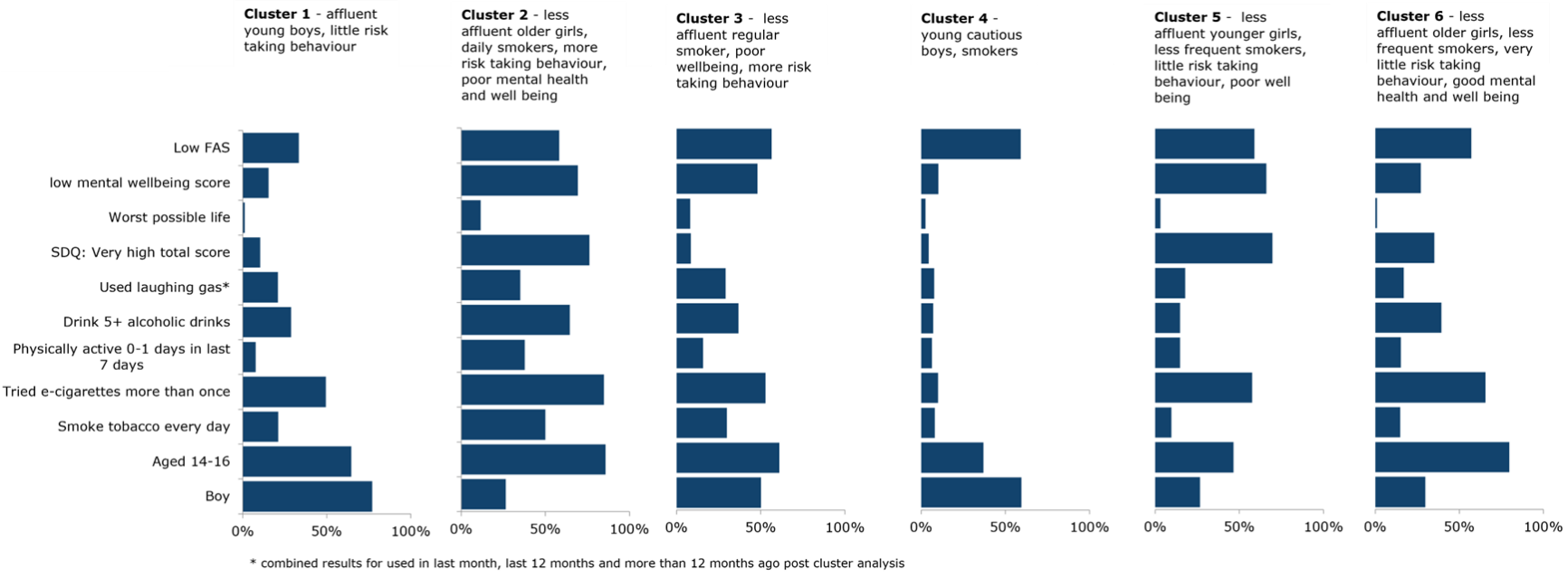
Clusters 1-6 were 21%, 21%, 10%, 11%, 21%, 17% of the response respectively; SHRN 2021/22
View data in an accessible table
Describing different cluster groups of adults who smoke
Smoking prevalence
In Wales in 2021/22, 13% of adults (aged 16+ years) reported that they smoke, 29% were ex-smokers and 58% reported never smoking from 6,405 responses (weighted).
Cluster groups
We identified 4 distinctive cluster groups of adult smokers (figure in brackets is the % of the population included in each cluster group).
1) Men and women without children who were more affluent, a mix of married couples and singletons, in good health, had higher alcohol intake (33%)
2) Men and women with poor health, mental health and wealth, more singletons, poorer education, more were females, more had children (14%)
3) Young men and women smokers who were mostly single with no children, trying to quit smoking and using e-cigarettes, a more educated and employed version of cluster 2, they were not as deprived but had poorer mental health (39%)
4) Older smokers, mostly retired, they were less deprived, had poor health but high life satisfaction (13%)
[Methodological note: All proportions listed above are weighted to national proportions; unweighted counts were 841 total responses, for cluster groups 1-4 unweighted counts were 233, 147, 261, 200 respectively].
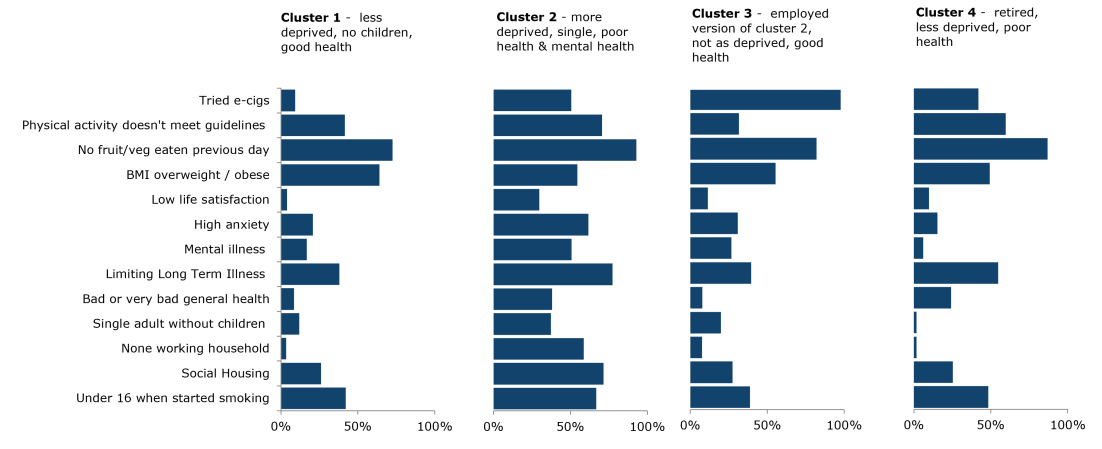
Clusters 1-4 were 33%, 14%, 39%, 13% of the response respectively; NSW 2021/22
View data in an accessible table
Describing different cluster groups of adults who are ex-smokers
Cluster groups
We identified 4 distinctive groups of adult ex-smokers (figure in brackets is the % of the population included in each cluster group).
1) Men and women with poorer health, mental health and wealth, a mix of married couples or divorced people, more had no children (7%)
2) Men and women who were middle aged and had children, less deprived, more healthy, happy, and working, more were married couples but fewer had tried e-cigarettes (38%)
3) Young men and women, more educated, poorer mental health, a younger, single version of cluster 1, slightly more deprived, more had children, had mostly tried e‑cigarettes and more were using them now (20%)
4) Older men and women, retired, including more age ≥ 75 years, more were in poor health, were married, had never used e-cigarettes, they had high life satisfaction (34%)
[Methodological note: All proportions listed above are weighted to national proportions; unweighted counts were 2,136 total responses, for cluster groups 1-4 unweighted counts were 148, 735, 271, 982 respectively].
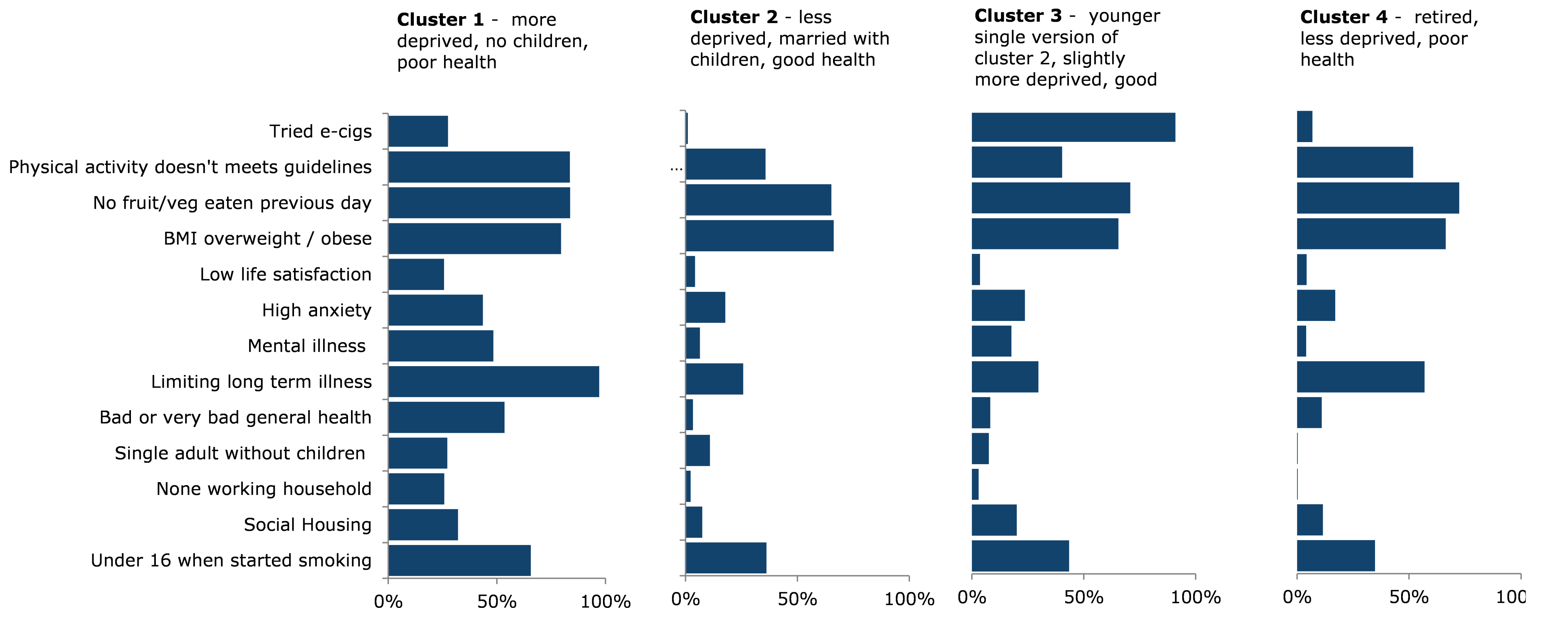
Clusters 1-4 were 7%, 38%, 20%, 34% of the response respectively; NSW 2021/22
View data in an accessible table
Comparison between adults who are smokers and ex-smokers
The analysis showed that, when compared to smokers, adult ex-smokers tended to be:
- Of older age ≥ 75 years
- More affluent, better educated, employed,
- Had a partner/in a couples and had children
- Were happier and with less mental health problems
- Were more likely to report higher physical activity, healthy weight and good diet but more were in poorer health (some healthy behaviours may have been triggered by poor health)
We also found that more ex-smokers were using e-cigarettes daily than smokers, and this was more evident in those aged less than 35 years.
Conclusions and recommendations
Findings with recommendations
- This study finds that the population of young people and adults who smoke are not all the same, but it is possible to group them by common characteristics. This may be useful to help understand the motivators for smoking in these different groups to target messaging and strategies to support reduction and stopping smoking.
- As smoking prevalence falls, smokers are becoming more defined into specific profiles and the next step is to tailor health messaging to try to help these groups. There is a rich amount of information about characteristics in these analyses that gives choice about where and how to target messaging for smoking cessation e.g. smokers with different lifestyles (drinking alcohol, exercise, healthy eating, obesity) or age groups. For example, living in social housing (Figure 2, 3) where messaging about Help Me Quit services could be placed where they are more likely to be seen.
- Poorer Strength and Difficulties (SDQ) total scores and lower prosocial skills (i.e. behaviours that benefit others or society) feature dominantly in the youth clusters for daily smokers and this may be an indication of poorer mental health such as coping skills. Further support for adolescent mental health problems may be a possible intervention for teenagers to help them quit smoking or prevent them from starting to smoke.
Conclusions
This study has demonstrated how a novel clustering method can help to identify different groups of smokers that share common characteristics and different groups who have stopped smoking. These insights provide a more complete understanding of the factors that may contribute to smoking, the barriers to stop smoking and help inform conversations about quitting smoking. To our knowledge this is the first time this type of analysis has been done in Wales or elsewhere in large population surveys with multiple questions on themes covering demographic, health and lifestyle factors. This study complements other research into motivations and barriers of the smoking population in Wales found in studies such as the Personas project (available on request).
Smoking in Wales may be higher than reported in the surveys used in this study because people may perceive it is not socially acceptable to smoke and therefore may not disclose that they smoke.
How the findings have been used
Public Health Wales has used the findings of this study to inform the Welsh Government Tobacco Control Board and our PHW consultants have used this information to:
- inform the development of the PHW strategy to reduce smoking in Wales
- inform development of HMQ marketing activities
- provide evidence on e-cigarette use to support the debate in Welsh Government on use of disposable vapes by adolescents and the plan to ban disposable vapes
- provide evidence to support the UK Government legislation to increase the age when people can legally buy tobacco and to restrict the availability and visibility of vapes
Authors and acknowledgements
Authors
Rhian Hughes, Dr Annette Evans, Danielle Hearne, Dr Kirsty Little, Chris Emmerson, Rebecca Hughes, Liz Newbury-Davies, Prof Alisha R. Davies, Dr Louisa Nolan.
This work was funded in collaboration across Public Health Wales (PHW).
Acknowledgements
We would like to acknowledge the Welsh Government for making the National Survey for Wales available to PHW for the research in this study. Also, DECIPHer at Cardiff University for making the School Health Research Network (SHRN) Student Health and Well-being (SHW) Survey in Secondary Schools available to PHW for this project and for their review of this report. We would also like to acknowledge Jonathan Rees, Rosemary Walmsley and Serenay Ozalp for their contributions to the presentation of findings in this study. We would like to thank all those who filled in the survey questionnaires used in this study.
Graphic designed by Freepik at www.freepik.com
References
- Public Health Wales Observatory. Cardiff. 2019 [cited 2023 Oct 11]. Smoking in Wales. Available from: https://publichealthwales.shinyapps.io/smokinginwales/ ↩︎
- Welsh Government. A smoke-free Wales: Our long-term tobacco control strategy. Our long-term plan towards a smoke-free Wales by 2030. [Internet]. Cardiff; 2022 Jul [cited 2024 Aug 1]. Available from: https://www.gov.wales/tobacco-control-strategy-wales-html ↩︎
- NHS. Public Health Wales. 2024 [cited 2024 Aug 2]. Help Me Quit. Available from: https://helpmequit.wales/ ↩︎
- Welsh Government S. National Survey for Wales headline results: April 2021 to March 2022 [Internet]. Cardiff; 2022 [cited 2023 Oct 8]. Available from: https://www.gov.wales/national-survey-wales-headline-results-april-2021-march-2022-html ↩︎
- Office for National Statistics (ONS). Adult smoking habits in the UK: 2022 Cigarette smoking habits among adults in the UK, including the proportion of people who smoke, demographic breakdowns, changes over time and use of e-cigarettes. [Internet]. 2023 [cited 2024 Aug 1]. Available from: https://www.ons.gov.uk/peoplepopulationandcommunity/healthandsocialcare/healthandlifeexpectancies/bulletins/adultsmokinghabitsingreatbritain/2022 ↩︎
- Department of Health and Social Care. The End of Smoking: A brief guide for local authority members and officers and their partners on Health and Wellbeing Boards. UK: ASH – Action on Smoking and Health; 2019 ↩︎
- Public Health Wales Observatory. Analysing the comparative effectiveness of treatments offered by Stop Smoking Wales [Internet]. Cardiff; 2018 [cited 2023 Oct 11]. Available from: https://phw.nhs.wales/services-and-teams/observatory/data-and-analysis/ssw-report-2019/ ↩︎
- Welsh Government. Statistics and research. 2023 [cited 2024 Aug 2]. NHS smoking cessation services: January to March 2023 – Data on Welsh resident smokers making a quit attempt via smoking cessation services. Available from: https://www.gov.wales/nhs-smoking-cessation-services-january-march-2023 ↩︎
- Patel A, Shaw H, Little K. Evidence base for risk and protective factors associated with smoking initiation and cessation: A brief scope of the literature [Internet]. Cardiff; 2022 [cited 2023 Oct 11]. Available from: https://phw.nhs.wales/services-and-teams/observatory/evidence/evidence-documents/other-public-health-topics/smoking-scoping-report/ ↩︎
- Office for Health Improvement and Disparities. The Khan Report: Making smoking obsolete – Independent review into smokefree 2030 policies [Internet]. London; 2022 [cited 2023 Oct 6]. Available from: https://assets.publishing.service.gov.uk/government/uploads/system/uploads/attachment_data/file/1081366/khan-review-making-smoking-obsolete.pdf ↩︎
- Welsh Government. A smoke-free Wales: Our long-term tobacco control strategy. Our long-term plan towards a smoke-free Wales by 2030. [Internet]. Cardiff; 2022 Jul [cited 2024 Aug 1]. Available from: https://www.gov.wales/tobacco-control-strategy-wales-html ↩︎
- Gallus S, Muttarak R, Franchi M, Pacifici R, Colombo P, Boffetta P, et al. Why do smokers quit? Eur J Cancer Prev . 2013;22(1):96–101. ↩︎
- NICE. NICE guideline NG209 Tobacco: preventing uptake, promoting quitting and treating dependence – summary for Primary Care [Internet]. 2023 [cited 2023 Oct 9]. Available from: https://www.medscape.co.uk/viewarticle/tobacco-promoting-quitting-and-treating-dependence-2022a10018l9# ↩︎
- Welsh Government. A smoke-free Wales: Our long-term tobacco control strategy. Our long-term plan towards a smoke-free Wales by 2030. [Internet]. Cardiff; 2022 Jul [cited 2024 Aug 1]. Available from: https://www.gov.wales/tobacco-control-strategy-wales-html ↩︎
Appendix
Alternative accessible tables for figures
Accessible table for Figure 1. Percentage of responses for selected questions and categories in smokers aged 11-16 years by cluster groups (includes responses with ‘I do not want to answer’ smoking status, N=8,842)
Clusters 1-6 were 21%, 21%, 10%, 11%, 21%, 17% of the response respectively; SHRN 2021/22
| Cluster | Boy |
Aged 14-16 |
Smoke tobacco every day |
Tried e-cigarettes more than once |
Physically active 0-1 days in last 7 days |
Drink 5+ alcoholic drinks |
Used laughing gas |
SDQ: Very high total score |
Worst possible life |
low mental wellbeing score |
Low FAS |
| 1 | 77 | 65 | 21 | 49 | 8 | 29 | 21 | 10 | 1 | 15 | 33 |
| 2 | 27 | 86 | 50 | 85 | 38 | 64 | 35 | 76 | 12 | 69 | 58 |
| 3 | 50 | 61 | 30 | 53 | 16 | 37 | 29 | 9 | 8 | 48 | 57 |
| 4 | 60 | 37 | 8 | 10 | 6 | 7 | 8 | 4 | 3 | 10 | 59 |
| 5 | 27 | 46 | 10 | 58 | 15 | 15 | 18 | 70 | 3 | 66 | 59 |
| 6 | 30 | 80 | 15 | 66 | 15 | 39 | 17 | 35 | 1 | 27 | 57 |
Accessible table for Figure 2. Percentage of responses for selected questions and categories in adult smokers by cluster groups (N=833 weighted)
Clusters 1-4 were 33%, 14%, 39%, 13% of the response respectively; NSW 2021/22
| Cluster |
Under 16 when started smoking |
Social Housing |
None working household |
Single adult without children |
Bad or very bad general health |
Limiting Long Term Illness |
Mental illness |
High anxiety |
Low life satisfaction |
BMI overweight / obese |
No fruit/veg eaten previous day |
Physical activity doesn’t meet guidelines |
Tried e-cigs |
| 1 | 42 | 26 | 3 | 12 | 8 | 38 | 17 | 21 | 4 | 64 | 73 | 42 | 9 |
| 2 | 67 | 71 | 59 | 37 | 38 | 77 | 51 | 62 | 30 | 54 | 93 | 71 | 51 |
| 3 | 39 | 27 | 8 | 20 | 8 | 39 | 27 | 31 | 11 | 55 | 82 | 32 | 98 |
| 4 | 48 | 25 | 2 | 2 | 24 | 55 | 6 | 15 | 10 | 49 | 87 | 60 | 42 |
Accessible table for Figure 3. Percentage of responses for selected questions and categories in adult ex-smokers by cluster groups (N=1,887 weighted)
Clusters 1-4 were 7%, 38%, 20%, 34% of the response respectively; NSW 2021/22
| Cluster |
Under 16 when started smoking |
Social housing |
None working household |
Single adult without children |
Bad or very bad general health |
Limiting Long Term Illness |
Mental illness |
High anxiety |
Low life satisfaction |
BMI overweight / obese |
No fruit/veg eaten previous day |
Physical activity doesn’t meet guidelines |
Tried e-cigs |
| 1 | 66 | 32 | 26 | 27 | 54 | 97 | 48 | 44 | 26 | 80 | 84 | 84 | 27 |
| 2 | 36 | 7 | 2 | 11 | 3 | 26 | 6 | 18 | 4 | 66 | 65 | 36 | 1 |
| 3 | 43 | 20 | 3 | 8 | 8 | 30 | 18 | 24 | 4 | 65 | 71 | 40 | 91 |
| 4 | 35 | 12 | 0 | 0 | 11 | 57 | 4 | 17 | 4 | 66 | 72 | 52 | 7 |